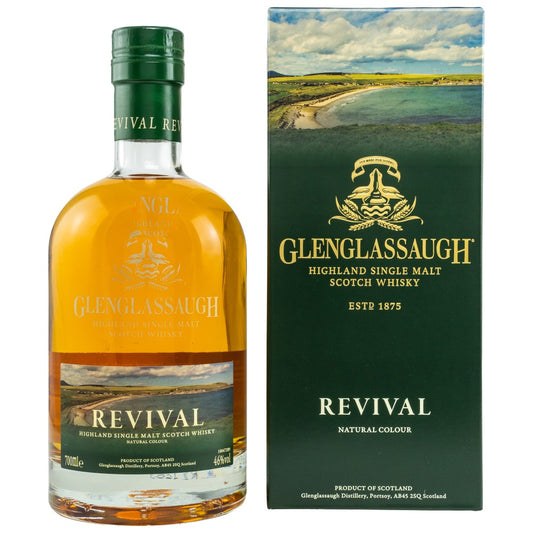
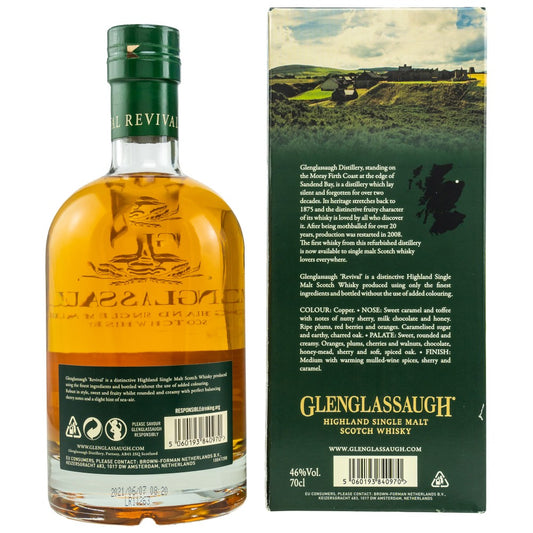
History, production and special features
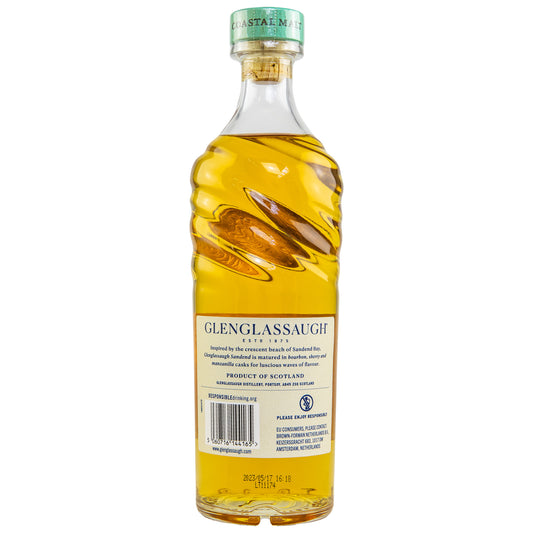
Whisky is a drink steeped in history, tradition, and passion, and that's precisely what makes it so special for many. If you're just beginning your whisky journey or already consider yourself an intermediate, there's hardly a better distillery to visit than Glenglassaugh. Here, you'll learn what makes this distillery so unique, how it produces its whisky, and which special distilleries it offers.
A journey into the history of Glenglassaugh
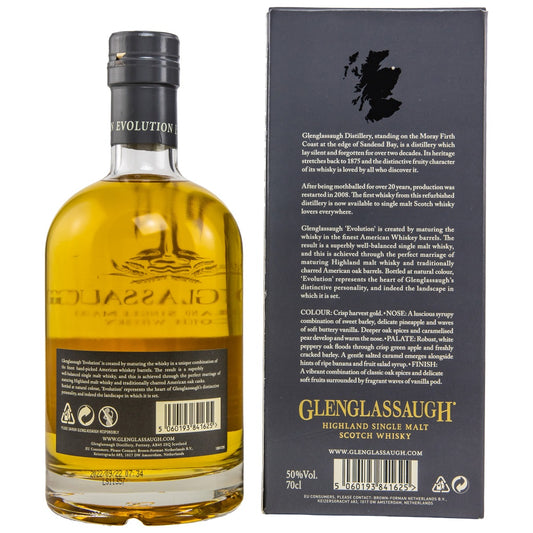
The Glenglassaugh Distillery is located on the stunning Sandend coast in the Scottish Highlands. It was founded in 1875 by James Moir and his nephews. Even then, the location was considered ideal, as the clear spring water and maritime surroundings provided the perfect conditions for whisky production.
Unfortunately, the distillery has experienced some ups and downs throughout its history. It closed in 1986 and lay dormant for almost two decades. Fortunately, Glenglassaugh was revived in 2008 and has been shining brightly ever since. Since then, it has earned a reputation for high-quality, handcrafted whiskies that appeal to both experienced and new whisky lovers.
How whisky is made at Glenglassaugh
The production of a Glenglassaugh whisky is a tribute to traditional craftsmanship. Nothing is left to chance, and every step is carefully monitored to ensure a premium product. Let's take a look at the most important steps together.
1.The influence of natural resources
The Glenglassaugh distillery benefits from its unique coastal location. The water used for production comes from nearby springs and is carefully filtered to preserve its purity. The maritime climate also plays a role, contributing to the maturation of the whisky and imparting subtle maritime notes.
2.Malted barley and the use of yeast
Only the finest malted barley is used for production. It is mixed with spring water in a warm mash to convert the starch into sweet sugar. Yeast then comes into play, converting the sugar into alcohol and imparting the initial flavor nuances to the mash.
3.distillation
Distillation at Glenglassaugh takes place in traditional copper pot stills. This process ensures the whisky maintains its distinctive texture and purity. While many distilleries use automated processes, Glenglassaugh remains committed to manual production to guarantee the quality of every drop.
4.Barrel selection and storage
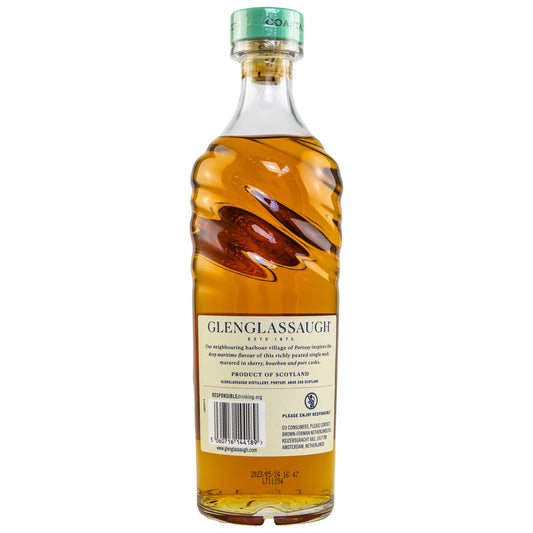
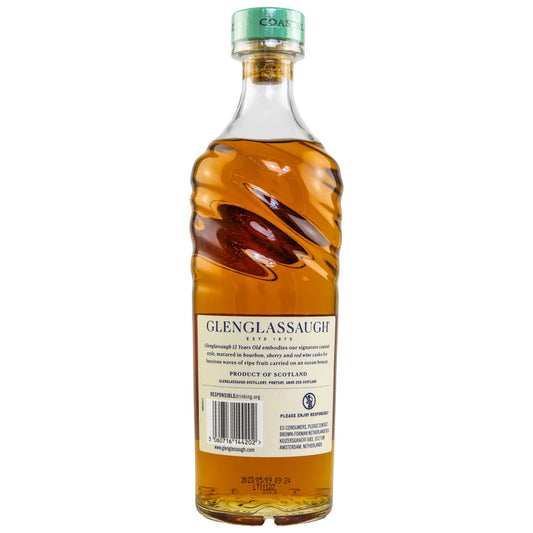
The magic happens, above all, in the casks. Glenglassaugh uses carefully selected oak casks, including bourbon, sherry, and red wine casks. Each cask imparts its unique aromas and, to some extent, its color to the whisky. The long maturation near the coast also results in subtle saline notes that are a hallmark of Glenglassaugh products.