

-
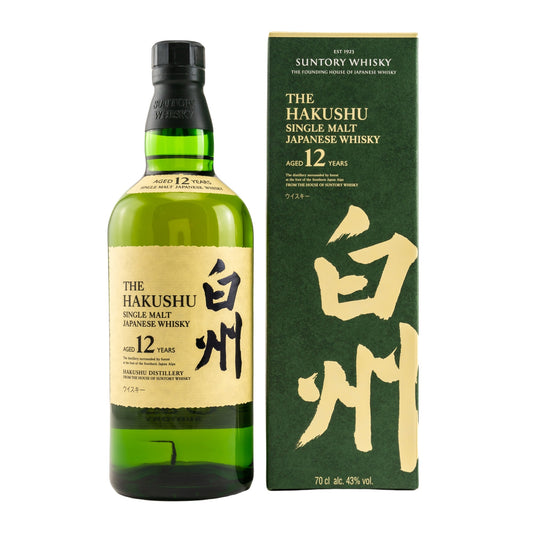
The Hakushu 12 years 43.0% 0.7l
Regular price CHF 171.00Regular priceUnit price CHF 244.29 per l


4.9 / 5
The MACALLAN Tasting with Andreas Künster on 13.11.26
-- Delias Dram Loyalty Program Launched --
4.9 / 5
The MACALLAN Tasting with Andreas Künster on 13.11.26
-- Delias Dram Loyalty Program Launched --
4.9 / 5
The MACALLAN Tasting with Andreas Künster on 13.11.26
-- Delias Dram Loyalty Program Launched --
4.9 / 5
The MACALLAN Tasting with Andreas Künster on 13.11.26
-- Delias Dram Loyalty Program Launched --
4.9 / 5
The MACALLAN Tasting with Andreas Künster on 13.11.26
-- Delias Dram Loyalty Program Launched --
4.9 / 5
The MACALLAN Tasting with Andreas Künster on 13.11.26
-- Delias Dram Loyalty Program Launched --
Japanese whisky originated in the early 20th century, when pioneers like Masataka Taketsuru learned the craft in Scotland and brought it to Japan. Since then, Japanese whisky has developed into an international benchmark for quality, synonymous with precision and elegance. The most important production regions are the islands of Honshu and Hokkaido, where the climate and landscape—similar to Scotland—play an important role. Regions like Yamazaki and Hakushu are particularly known for their high-quality distilleries. Famous brands include Suntory (with Yamazaki and Hakushu) and Nikka, both of which have received numerous awards worldwide. Smaller distilleries like Chichibu are also gaining increasing importance. Japanese whisky is characterized by its refined, often well-balanced style, characterized by artisanal perfection and frequent influence from nature. Typical features include light, floral aromas, precisely balanced blends, and often elaborate aging in rare wood species such as Mizunara oak.
Japanese whisky has gained international recognition and particular interest in recent decades. Its unique balance of tradition, innovation, and exceptional quality has made it a fixture in the world of whisky. But what exactly makes Japanese whisky so special? Where does it come from, and how is it produced?
Below, you'll learn more about the history of Japanese whisky, the most famous distilleries, the different styles, and the production processes. Whether you're a beginner or an experienced whisky lover, here you'll find the essential information you need to explore the world of Japanese whisky.
Japanese whisky has a relatively short but extremely impressive history. Its roots lie in the early 20th century, when the art of whiskymaking came to Japan from Scotland.
The story begins with two names now known as the fathers of Japanese whisky: Shinjiro Torii and Masataka Taketsuru. Torii, the founder of Suntory, wanted to create a whisky tailored to the tastes of the Japanese population. To achieve this, he recruited Taketsuru, who had studied the craft of whisky in Scotland. Taketsuru brought with him a profound knowledge of Scottish distilling and played a pivotal role in the establishment of Japan's first whisky distillery—the Yamazaki Distillery—in 1924.
For a long time, Japanese whisky was primarily popular locally, but in the 2000s, its international fame began. In 2003, the "Yamazaki 12 Years" won a prestigious blind tasting, and in 2014, whisky critic Jim Murray declared the "Yamazaki Single Malt Sherry Cask 2013" the best whisky in the world. Since then, Japanese whisky has received numerous international awards, cementing its position as a leader in the industry.
Japan is home to several well-known and highly respected whisky distilleries. Here are some of the most important:
The Yamazaki distillery is the oldest in Japan. Located near Kyoto, it is operated by Suntory. The whisky produced here is influenced by the region's mild climate and pure water sources, offering a balanced flavor experience.
Masataka Taketsuru foundedNikkaafter leaving Suntory. Nikka operates two main distilleries:
Hakushu is another Suntory distillery located deep in the forests of the Japanese Alps. The whiskies here are characterized by their fresh, herbal notes.
Chichibu was only founded in 2008, but has already earned an excellent reputation. It is a small, independent distillery known for experimental and innovative whiskies.
Japanese whisky covers a wide range of flavors and is heavily inspired by Scottish influences. Yet it has developed its own unique style.
Made from malted barley and sourced exclusively from a single distillery, single malts offer complex and nuanced flavors. Examples include Yamazaki Single Malt and Yoichi Single Malt.
This style combines whiskies from different distilleries to create a balanced blend. Suntory Hibiki is a famous example, captivating with its elegant complexity. Blended whiskies, in particular, are highly valued in Japan. They are considered the finest blenders in the world and continue to honor this craft to this day.
Grain whiskies are made from grains such as corn or wheat and are generally lighter and smoother in flavor. They often form the basis for blended whiskies, but are also available individually.
Japanese distilleries are known for their innovative spirit, experimenting with different barrel types, including Mizunara oak (a rare Japanese oak) and environmentally specific storage conditions.
The production of Japanese whisky is very similar to the Scottish method, but has some peculiarities that give the whisky its unique character.
Malt
Similar to Scotland, the process begins with malted barley, which may be dried over peat fires to add smoky flavors.
Mashing and fermentation
The malted grain is ground and mixed with water. After yeast is added, fermentation begins, during which sugar is converted into alcohol.
distillation
The distilled liquid is heated in classic copper stills to extract the heart of the whisky.
maturation
The whisky is matured in barrels. Japanese producers often experiment with different types of wood, such as American oak, sherry casks, and Mizunara oak, to create complex flavors.
Blending
This is an art form in which Japanese distillers particularly excel. They devote considerable attention to the process to produce harmonious and complex whiskies.